Community Landscaping Initiatives in Savannah, GA: Delete the Border Between Public and Private

Savannah’s landscape tells a story that extends far beyond property lines. The city’s historic squares, Spanish moss-draped oak canopies, and verdant residential gardens form a continuous ecological and aesthetic system. Community landscaping initiatives are now challenging the traditional separation between public parks and private yards, creating interconnected green networks that deliver measurable benefits across neighborhoods. These programs produce quantifiable outcomes: reduced stormwater runoff, lower urban heat island effects, increased property values, and strengthened community ties. The results are visible within months, and the long-term impacts reshape how residents interact with their environment.

The Current State of Public-Private Landscape Division

Traditional urban planning draws hard lines between public and private green spaces. City parks receive municipal funding and maintenance. Private properties remain the responsibility of individual owners. This division creates fragmented landscapes with inconsistent ecological function and aesthetic quality. In Savannah, where historic preservation meets modern urban challenges, this separation limits the potential for comprehensive environmental solutions.

The data reveals the problem clearly. Residential properties comprise approximately 65% of Savannah’s total land area, while public parks and green spaces account for roughly 12%. When private landscapes remain disconnected from public initiatives, the majority of the city’s potential green infrastructure sits underutilized. Stormwater systems become overwhelmed during heavy rains. Heat islands develop in areas with insufficient tree canopy. Native pollinators lose habitat corridors. These issues require solutions that transcend property boundaries.

Emerging Community Landscaping Models

Several Savannah neighborhoods have launched initiatives that blur the public-private distinction. These programs operate on shared principles: coordinated plant selection, connected wildlife corridors, collaborative maintenance, and collective environmental goals. The implementation timelines vary, but most programs show measurable progress within the first growing season.

Neighborhood Canopy Networks

The Ardsley Park Canopy Initiative launched in 2021 with a specific target: increase neighborhood tree coverage from 38% to 50% within five years. Residents coordinate tree planting on private properties to extend public park canopies into residential streets. The program provides subsidized native trees, professional planting guidance, and maintenance support for the first two years.

Results through year three show 42% canopy coverage—ahead of the projected timeline. Summer temperatures in participating blocks measure 4-7 degrees Fahrenheit cooler than comparable non-participating areas. Property values in the initiative zone increased 3.2% above the neighborhood average over the same period.

Pollinator Pathway Projects

The Victorian District Pollinator Pathway connects 47 private gardens with three public squares through coordinated native plantings. Launched in spring 2022, the project established specific plant lists featuring species that bloom sequentially from March through November. Participating properties commit to eliminating pesticides and maintaining at least 200 square feet of native flowering plants.

Wildlife surveys conducted in fall 2023 documented 23 native bee species and 18 butterfly species using the corridor—a 40% increase from baseline surveys. The initiative required minimal public funding, with most costs borne by individual property owners who received bulk-purchase discounts on native plants and free landscape design consultations.

Stormwater Management Through Shared Landscapes

Savannah’s low elevation and heavy rainfall create persistent drainage challenges. Traditional approaches focus on engineered solutions: storm drains, retention ponds, and pumping stations. Community landscaping initiatives offer complementary strategies that distribute stormwater absorption across both public and private properties.

The Eastside Rain Garden Network illustrates this approach. Established in 2020, the program coordinated installation of 89 rain gardens across residential properties and public rights-of-way. Each garden captures runoff from 400-800 square feet of impervious surface. Professional landscaping in Savannah contractors provided standardized designs adapted to individual site conditions, ensuring proper sizing and plant selection.

Monitoring data from the first three years quantifies the impact. Participating properties reduce stormwater runoff by an average of 2,800 gallons per rain event. Street flooding in the initiative area decreased 60% during moderate storms compared to pre-installation baselines. Maintenance requirements proved minimal—participants report spending 2-3 hours per season on garden upkeep.

Implementation Frameworks That Deliver Results

Successful community landscaping initiatives share common structural elements. These frameworks balance individual property rights with collective environmental goals, creating systems that sustain themselves beyond initial enthusiasm.

Coordinated Design Standards

Effective programs establish clear plant palettes and design guidelines without mandating specific implementations. The Gordonston Green Streets Initiative provides residents with three approved landscape templates—formal, cottage, and native meadow—each featuring 15-20 recommended plant species. Property owners choose their preferred style and adapt it to their specific conditions. This approach maintains visual coherence while respecting individual preferences.

Implementation timelines typically span 18-24 months for full neighborhood participation. Early adopters create demonstration gardens that help later participants visualize outcomes. The Gordonston program reached 70% participation within 20 months, exceeding initial projections.

Shared Resource Systems

Community initiatives reduce individual costs through collective purchasing and shared equipment. The Parkside Landscape Cooperative negotiates bulk rates on native plants, mulch, and soil amendments. Members share specialized tools—sod cutters, chippers, and aerators—through a reservation system. The cooperative employs one part-time coordinator whose salary is covered by annual dues of $45 per household.

Financial analysis shows participating households save an average of $320 annually on landscape materials and equipment compared to individual purchasing. The cooperative model also facilitates knowledge sharing, with experienced gardeners mentoring newcomers through seasonal workshops and site visits.

Measuring Environmental and Social Outcomes

Quantifiable metrics prove essential for sustaining community landscaping initiatives. Programs that track and publicize results maintain momentum and attract new participants.

Environmental Metrics

Tree canopy coverage, measured through aerial imagery analysis, provides clear before-and-after comparisons. Stormwater capture calculations use standardized formulas based on rain garden dimensions and soil infiltration rates. Native plant coverage percentages track habitat quality improvements. Temperature monitoring documents urban heat island mitigation.

The Baldwin Park Neighborhood Green Initiative publishes quarterly environmental reports showing cumulative impacts. After four years, the program documents 12,400 native plants installed, 3.2 million gallons of annual stormwater capture, and 8.5 acres of wildlife habitat created across 124 participating properties.

Social and Economic Metrics

Property value analysis compares participating and non-participating properties within the same neighborhood. Resident surveys measure satisfaction, community connection, and time spent outdoors. Volunteer hours quantify community engagement. These metrics demonstrate benefits beyond environmental outcomes.

Survey data from the Daffin Park Landscape Network shows 78% of participants report increased interaction with neighbors, 65% spend more time in their yards, and 82% feel stronger neighborhood identity. Property value premiums for participating homes averaged 2.8% above comparable non-participating properties.

Overcoming Implementation Barriers

Community landscaping initiatives face predictable obstacles. Successful programs address these challenges proactively through clear communication, flexible frameworks, and sustained leadership.
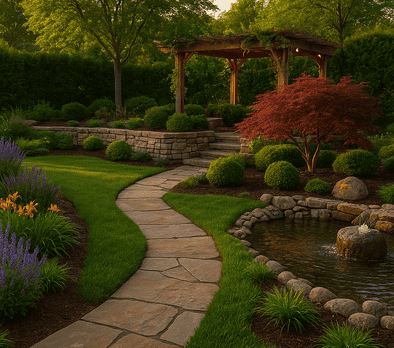
landscapers in savannah ga planning yards without borders

Homeowner Association Restrictions

Many neighborhoods have landscape covenants requiring turf grass and prohibiting native meadows or vegetable gardens. Progressive initiatives work with HOA boards to revise restrictions, often creating pilot programs that demonstrate outcomes before seeking broader policy changes. The Wilmington Island Native Landscape Pilot convinced the HOA to approve meadow gardens after a two-year demonstration period showed improved aesthetics and reduced maintenance costs.

Maintenance Concerns

Residents worry that native landscapes require specialized knowledge or excessive upkeep. Successful programs address this through education, mentorship, and realistic expectations. Most native landscapes require intensive management during establishment—12 to 18 months—then transition to low-maintenance maturity. Clear communication about this timeline prevents disappointment and abandonment.

Inconsistent Participation

Not every property owner joins community initiatives. Programs succeed by creating visible impact even with partial participation. The Thomas Square Green Corridor achieved significant ecological function with 55% neighborhood participation, demonstrating that perfection isn’t required for meaningful results.

Timeline for Establishing Community Initiatives

Launching a neighborhood landscaping program follows a predictable sequence. Understanding this timeline helps organizers set realistic expectations and maintain momentum.

Months 1-3: Organization and Planning

Form a core leadership group of 5-8 committed residents. Survey neighborhood interest through door-to-door outreach or community meetings. Identify specific environmental goals and draft preliminary guidelines. Connect with city officials, extension services, and existing organizations for technical support and potential funding.

Months 4-6: Design and Recruitment

Develop plant lists and design templates appropriate for local conditions. Create demonstration gardens on leadership team properties. Host information sessions showcasing program benefits and addressing concerns. Establish cost-sharing structures and resource systems.

Months 7-12: Initial Implementation

Coordinate first-round installations during optimal planting seasons—fall and early spring in Savannah. Organize group workdays for projects on public rights-of-way. Provide technical support for private property installations. Document progress through photos and measurements.

Months 13-24: Expansion and Refinement

Recruit additional participants using early successes as demonstration sites. Refine guidelines based on first-year outcomes. Establish maintenance schedules and support systems. Begin environmental monitoring to document impacts.

The Future of Integrated Urban Landscapes

Community landscaping initiatives represent a fundamental shift in how cities approach green infrastructure. Rather than relying solely on municipal parks and engineered systems, these programs activate the collective potential of private properties. The model scales efficiently—each participating property multiplies the ecological function of public green spaces.

Savannah’s initiatives provide templates other cities can adapt. The key elements transfer across different climates and community types: coordinated design, shared resources, clear metrics, and respect for individual property rights within collective frameworks. As climate change intensifies urban heat and stormwater challenges, these distributed landscape networks offer practical, cost-effective solutions that strengthen communities while improving environmental outcomes.

The border between public and private landscapes doesn’t need to disappear entirely. It needs to become permeable—a zone of collaboration rather than separation. When neighbors coordinate their landscape choices with environmental goals and aesthetic vision, the cumulative impact transforms entire neighborhoods. The results appear quickly, the benefits compound over time, and the model sustains itself through shared investment in collective outcomes.

Structural Drying Services and Living Conditions in Border Communities


Understanding Housing Challenges in Border Regions

Communities near the U.S.–Mexico border often face unique housing and infrastructure challenges. Rapid population growth, economic pressures, and shifting migration patterns can place strain on housing availability and maintenance.

Organizations such as the Migration Policy Institute provide research and insights into immigration trends and how they impact living conditions, including housing stability in border regions.

The Importance of Maintaining Safe Living Spaces

Regardless of location, safe and well-maintained housing is essential for health and well-being. In areas experiencing high turnover or aging infrastructure, issues like water damage can develop quickly and worsen if not addressed.

Professional solutions such as Structural Drying Services in Mesa play a key role in restoring homes after water-related damage. For residents in Mesa, working with providers like Mesa Water Damage Restoration Crew helps ensure that moisture is properly removed and structural integrity is preserved.

Preventing Long-Term Damage in Vulnerable Housing

Water damage can lead to mold growth, weakened structures, and poor indoor air quality. In communities where housing may already be under pressure, these issues can quickly escalate and affect multiple households.

Timely intervention through structural drying and restoration helps prevent further deterioration. Addressing these problems early supports safer and more stable living environments for families.

Balancing Policy Discussions with Practical Needs

Discussions around immigration and border policies often focus on legal, economic, and humanitarian perspectives. However, the day-to-day reality for many residents also includes practical concerns like maintaining safe and livable homes.

Resources such as American Immigration Council highlight the broader context of immigration while also emphasizing the importance of community well-being and stability.

Supporting Stronger Communities Through Better Housing

At the local level, maintaining housing quality plays a major role in supporting resilient communities. Services that address issues like water damage contribute to healthier living conditions and reduce long-term risks.

By combining awareness of broader regional challenges with proactive home maintenance, communities—whether near the border or in cities like Mesa, Arizona—can create safer, more stable environments for residents over time.

Border Infrastructure Challenges and Professional Hydrojetting Services


Understanding Infrastructure Pressures in Border Regions

Communities near the U.S.–Mexico border often experience rapid population changes, which can place added strain on infrastructure systems like housing, water supply, and sewage. As populations grow and shift, maintaining reliable sanitation systems becomes increasingly important for public health and daily living.

Research organizations such as the Brookings Institution – Immigration Research provide in-depth analysis on how immigration patterns impact infrastructure, including the challenges faced by border communities.

The Importance of Modern Plumbing and Drain Systems

Sanitation systems are a critical part of any functioning community. Over time, pipes can accumulate debris, grease, and buildup that restrict flow and create blockages. In areas with aging or overused infrastructure, these issues can occur more frequently and lead to costly damage if not addressed.

Solutions like Professional Hydrojetting Services in Longmont offer an effective way to clear out pipes using high-pressure water. For residents and property owners in Longmont, working with companies like Longmont Plumber Pros can help maintain efficient plumbing systems and prevent recurring issues.

Preventing Larger Sanitation Problems

Blocked or slow-moving drains can lead to backups, unpleasant odors, and even health risks if wastewater is not properly managed. Regular maintenance and proactive cleaning help prevent these problems before they escalate.

Hydrojetting is particularly useful because it removes buildup along pipe walls, restoring proper flow and extending the lifespan of plumbing systems. This approach is valuable not only in high-density areas but also in growing cities across the country.

Balancing Policy Conversations with Practical Needs

While discussions around immigration and border policy often focus on legal and economic factors, there are also everyday infrastructure needs that affect people’s quality of life. Reliable plumbing and sanitation systems are essential for maintaining safe and livable environments.

Organizations like the Cato Institute – Immigration explore various perspectives on immigration and its broader societal impacts, including how communities adapt to growth and change.

Supporting Stronger Communities Through Infrastructure

Maintaining clean and functional infrastructure is a key part of building resilient communities. Whether in border regions or cities like Longmont, Colorado, addressing plumbing challenges helps ensure that homes and businesses remain safe and operational.

By combining awareness of larger regional dynamics with proactive maintenance solutions, communities can better support their residents and maintain a higher quality of life over time.

How The Water Damage Restoration Response in Oakville, ON Exemplifies Community Organizing Lessons Applied Beyond Boundaries

When communities face unexpected crises, the way they organize their response often reveals powerful lessons that extend far beyond the immediate situation. In Oakville, Ontario, the coordinated approach to emergency water damage situations has become a surprising case study in effective community organizing, demonstrating principles that activists, neighborhood groups, and civic leaders can apply to virtually any collective challenge.

The Speed and Structure of Emergency Response

The professional response to water damage in Oakville offers a blueprint for rapid community mobilization. When a basement floods or a pipe bursts, restoration teams don’t waste time debating—they follow established protocols that prioritize immediate action, clear communication, and defined roles. This same urgency and structure can transform how communities address everything from environmental concerns to social justice initiatives.

What makes this model particularly instructive is the emphasis on triage. Water damage professionals immediately assess which problems need attention first, which can wait, and which resources to deploy where. Community organizers facing complex issues can adopt this same framework: identify the most urgent needs, allocate limited resources strategically, and create clear priorities that everyone understands.

Building Networks Before Crisis Strikes

Effective water damage restoration companies don’t build their networks during emergencies—they cultivate relationships with plumbers, electricians, insurance adjusters, and municipal officials long before disaster strikes. Organizations like the American Society of Plumbing Engineers provide resources and standards that help professionals prepare for flood protection scenarios before they become emergencies. This preparedness ensures that when crisis arrives, the response is seamless rather than chaotic.

Community organizers can learn from this proactive approach. Building coalitions, establishing communication channels, and creating mutual aid networks before they’re desperately needed makes any future response exponentially more effective. The relationships formed during calm periods become the infrastructure that supports action during urgent times.

Transparent Communication as a Foundation

One hallmark of professional restoration work is clear, honest communication about what’s happening, what needs to happen next, and what realistic outcomes look like. Homeowners receive regular updates, understand the timeline, and know what to expect at each stage of the process.

This transparency builds trust—perhaps the most valuable currency in any community organizing effort. When people understand the situation clearly, feel included in the process, and receive consistent updates, they’re more likely to remain engaged and supportive even when progress feels slow.

Documentation and Accountability

Water damage restoration professionals meticulously document every step of their work. They photograph damage, track moisture levels, record equipment placement, and maintain detailed logs. This documentation serves multiple purposes: it satisfies insurance requirements, provides legal protection, and creates accountability.

water damage restoration crews in oakville addressing a border crisis

Community organizing efforts benefit enormously from similar documentation practices. Recording attendance at meetings, tracking commitments, photographing events, and maintaining clear records creates accountability while also building an archive that demonstrates progress over time. This documentation becomes evidence of impact when seeking funding, recruiting volunteers, or demonstrating success to skeptical stakeholders.

The Power of Specialized Roles

Restoration teams succeed because everyone has defined expertise. The water extraction specialist, the structural drying technician, and the mold remediation expert each contribute specific skills. No one person tries to do everything.

Effective community organizing similarly requires recognizing and utilizing diverse skills within a group. Some people excel at public speaking, others at detailed planning, still others at relationship building or financial management. Acknowledging these different strengths and creating roles that leverage them makes the entire effort more sustainable and successful.

Measuring Progress with Objective Metrics

Water damage professionals use moisture meters, thermal imaging cameras, and humidity monitors to track progress objectively. These tools remove guesswork and provide concrete evidence that work is moving forward.

Community organizers can establish their own metrics—petition signatures gathered, attendance at events, policy changes achieved, or funds raised. These objective measures help maintain momentum, celebrate incremental victories, and adjust strategies when progress stalls.

Applying These Lessons Broadly

The coordinated response to property emergencies in Oakville demonstrates that effective organizing requires preparation, clear communication, defined roles, documentation, and measurable goals. These principles transcend any single issue or industry, offering a framework that communities can adapt to virtually any collective challenge they face together.

How To Use This Site

The moderators of deletetheborder.org would like to thank you for your patience as we put together this document. It is an attempt to inform people about DTB and encourage more interactive use of the site. Thank you for being a part of this online community. Please direct any questions to: deletetheborder at gmail d0t com

Below you will find some information about the type of site it is and how to use it. The theme for the site is noborders. We are trying to collect stories about migration, noborder movements, anti-immigrant racism, and collective struggles against globalization. We welcome you to our community and look forward to you contributions.

deletetheborder.org is an open-publishing content management platform. What that means for site users is that we can easily publish, manage and organize the site. It means that everyone can work on the content not just an oligarchy of techs holding all the power. Like indymedia sites but more focused by topic.

In addition, we have recently added better multi-lingual support to deletetheborder.org, in order to make this site more accessible and useful to a wider audience. We will also continue to work on and improve the multi-lingual options of the site in the future.

Multilingual functions now include:

– language selection buttons on the upper right
– translated buttons and menus when you select a different language
– a translation tab for each story, which allows anyone to add a translation
– a list of translations at the bottom of stories that have them
—
When you log in to deletetheborder, you will see the following list down the right side of the page (it will be in a different order but this is the order of instructions below) :

> create content
> news aggregator
recent posts
my image gallery
my blog
my account

The greatest thing about open publishing sites is that all users can create content. If you click on the create content link, it takes you to a page that lists the different types of content that you can add to the site. (You can choose from either the drop down list under create content in the right column or the main list that also has brief explanations of each type of content.) Depending on which you use, they will either be automatically published or be sent to the moderation queue. On the right hand side in each content area is a box where the appropriate selection in regards to moderation and publishing is checked. Even if you are not posting stories regularly, deletetheborder users can post comments on existing stories. ! ;

Unfortunately, there are many haters out there who try to access our site. This is why we take time when it comes to approval of new users. Sometimes we cannot filter out those with destructive intentions so we use these moderation filters to ensure that the site stays usable for those who are interested in its role as a tool towards a world without borders.

To supplement the basic instructions for using deletetheborder.org, here are some links and excerpts for basic html that would be useful when posting stories on deletetheborder (borrowed from livejournal.com). Below that are more instructions specific to deletetheborder functions.

http://www.livejournal.com/support/faqbrowse.bml?faqid=72&q=bold

Bold: Bold text by surrounding it with and tags. You can place as much text between the beginning and ending tags as you want, and all of it will be bold, even if there are spaces and
punctuation included.
→ Example: This text is in bold.

Italics: Italicize text by surrounding it with and tags. As with the bold tag, you can place as much text between the and tags as you want.

Underline: Underline text by surrounding it with and tags. Again, you can place as much text between these tags as you want, and it will all appear underlined.

Center: Center a line of text by surrounding it with and . These tags work very much like the tags described above, but you must start the text you would like to center on a separate line.

***
http://www.livejournal.com/support/faqbrowse.bml?faqid=6&q=img

To add an image to your journal entry, user bio or comments, use an tag where you want the image to appear, as follows: title or descriptionWithin the code, http://www.example.com/image.jpg must be replaced by the actual URL of the image, and title or description can be changed to give the image a title or description of your choice.
***
http://www.livejournal.com/support/faqbrowse.bml?faqid=67&q=img

When adding an image to a LiveJournal page, you can turn the image into a link by putting the code for the image between the opening and closing tags. For example:title or description
If you would like a border to appear around the image you are using as a link, change 0 to a positive number; increasing the number increases the size of the border.

News aggregator is a function that siphons news postings from various other sites around the world. If you scroll down any page on the site, in the right column after your menu and popular content is a list of other web sites that deletetheborder.org pulls from. Underneath the name of each one is the headlines of the three most recent articles posted. When you go into the news aggregator function in your account, you can see a more extensive newswire that lists the date, time and first paragraph of each story pulled as well as where it was published from.
Within this function, you can also organize how you want to view the news stories using categories or sources as a means of order. Right now, this site list is decided by the deletetheborder administrators – please contact us with comments or ideas for adding other sites to pull from.

Recent posts is broken into two sections where you can link to either all recent posts made to the site including other people’s blogs OR just look at your personal recent posts.

Clicking on my blog or my image gallery allows you to view these things.

Clicking on ‘my account’ allows you to access a handful of things including viewing your personal history of blog entries and private message as well as your image gallery. You can also edit your personal information like your username, e.mail address, password, language setting, etc. Your notify settings and post tracking are also here.

—

If you have any further questions, please direct them to the moderators, currently at deletetheborder at gmail dot com

WELCOME!!!

About Deletetheborder.org

Deletetheborder.org is an online community with the goal of nurturing a global network of movements against borders. We began the project in 2005. Sensing the tremendous potential energy and having seen the existence of many networks around the world like NoBorder.org and No One Is Illegal in Canada, we sought to use the latest technology to provide a site which would make international connections and act as a hub of resistance and emergence…

Deletetheborder.org is designed to be a place for information sharing through the use of open posting, news feed collection, media galleries, blogs and forums. We are currently in the midst of the largest migration in human history. The intense processes of neoliberal enclosure continue on despite unprecedented levels of resistance across the world. Thus, migration continues, from South to North, from colonized to colonizer. Most recently, under the guise of the war on terror, States are retaliating against this migration with repressive measures and elaborate systems of control and exploitation that function much like in-country colonization.

Against this murderous violence, movements have sprung up to work in conjunction and solidarity with migrant people. Our site seeks to aid the growth of these movements by providing information about borders and resistance to borders, but also by providing support for organizers including forums, hosting for data sharing and event calendars.

Our site currently offers visitors the option to see the site’s interface elements such as menus and buttons in English, Spanish or French. It also allows visitors to post translations for their stories. We frequently have posts in each of these languages as the posts often originate in the US, Canada, Mexico and Spain. Our contexts are some of the most contentious and violent borderlands of the world.

The project was begun, and is maintained by the o.r.g.a.n.i.c. collective and the borderlands hacklab in San Diego, California. The content of Deletetheborder.org is contributed by numerous organizers, hackers and bloggers in the US, Canada and Mexico. Stories are regularly posted by members of o.r.g.a.n.i.c, by organizers with No One Is Illegal in Canada and by net activists such as Ricardo Dominguez. Moving forward, the o.r.g.a.n.i.c collective and the borderlands Hacklab is working on a more formalized North American Network For Freedom of Movement. The administration of the site therefore, will soon include members of various groups around the country, including the Bay Area Coalition to Fight the Minutemen.

Within the last month our site traffic has doubled as the largest mobilizations ever seen in many cities across the US have taken place, including self-organized spontaneous walkouts by tens of thousands of students.

Deletetheborder.org is based on the Civicspace content management system, which is a variant of Drupal. It is composed of a PHP/MySql environment with various modules to provide different functions of the site. It runs on a GNU/Linux server running Fedora. The software that runs the site is GPL and the server runs on Free Software as well. The content posted on the site is licensed under the Creative Commons, By Attribution – Non-Commercial – Share-Alike license, unless otherwise specified.